
Read Time
12 mins
Main Content Focus
Competitor ResearchUser ResearchInteraction DesignDesign Process
My Roles
I have been looking after all bingo products for more than three years. As the only user experience designer on this project, I am responsible for everything UX-related to help the product grow. I work closely with key business stakeholders and the product owner, alongside roughly 4 UI designers, 5 developers, and 5 QAs at a time. Occasionally I collaborate with the SEO team, marketing team, and customer support team.
I feel lucky to have been responsible for the product for such a long period of time. These few years have helped me learn how to incrementally grow a product — it has been a valuable opportunity to understand a product cycle and learn through trial and error. Before diving into any specific task, the following shows some glimpses of the research I have done at different points in time.
Competitor Research
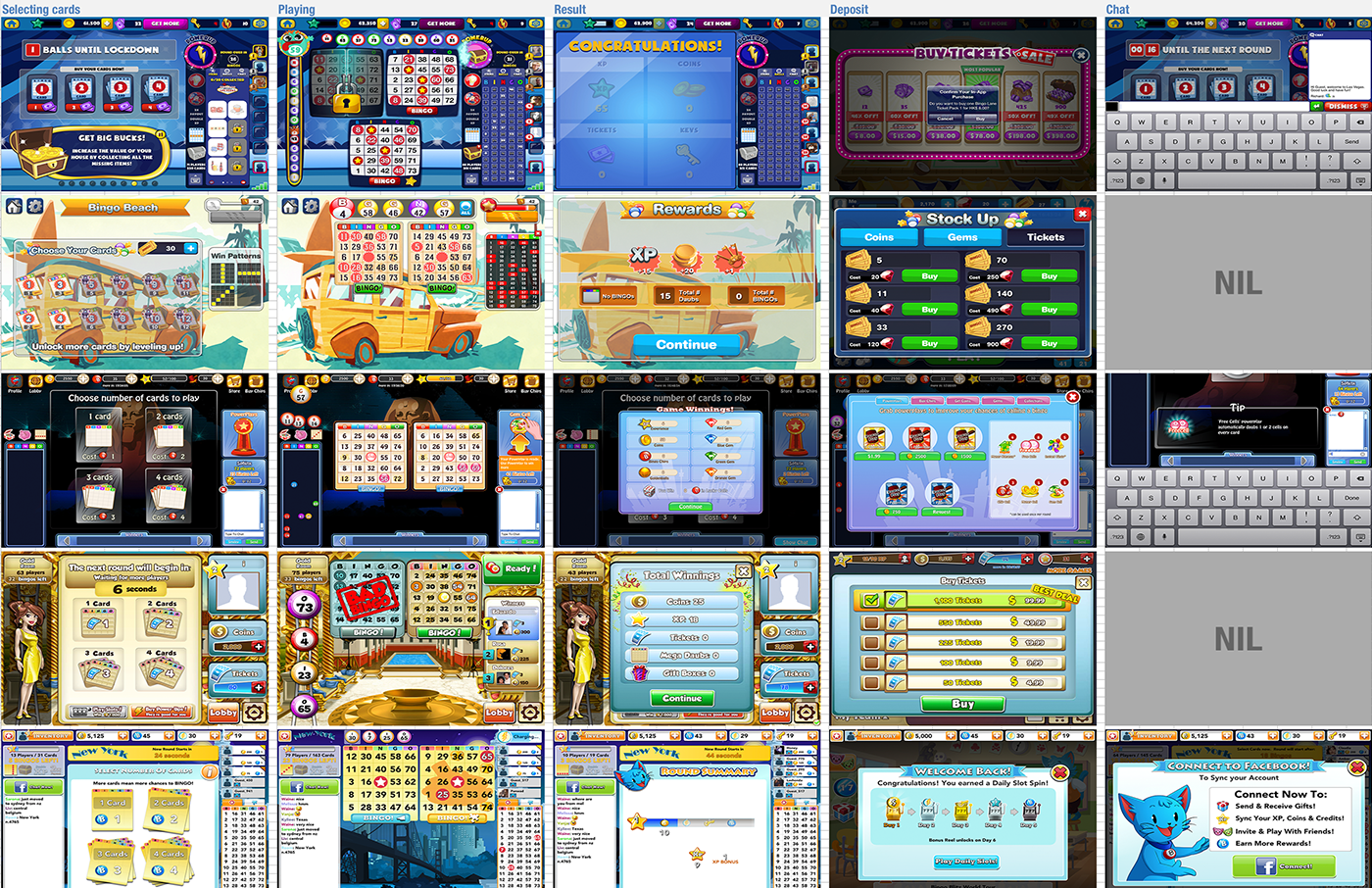
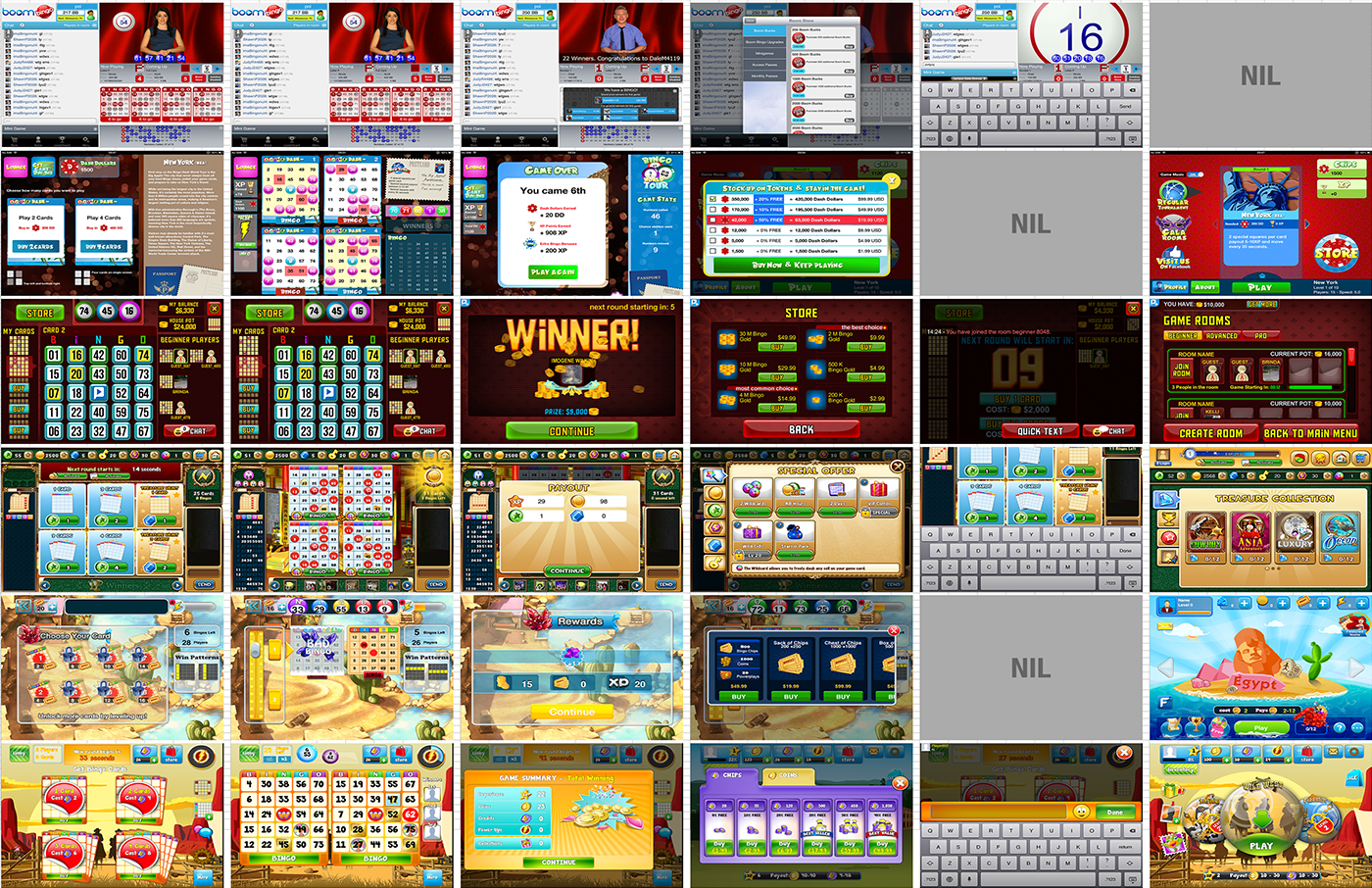
I conduct competitor research regularly to keep my first-hand knowledge of the good and bad experiences provided by rivals up to date. To do a comprehensive competitive analysis, I usually start by collecting a matrix of the main user flows. By gathering the screenshots, I can methodically collect data and avoid missing anything while researching. The matrix keeps track of everything that needs to be compared.
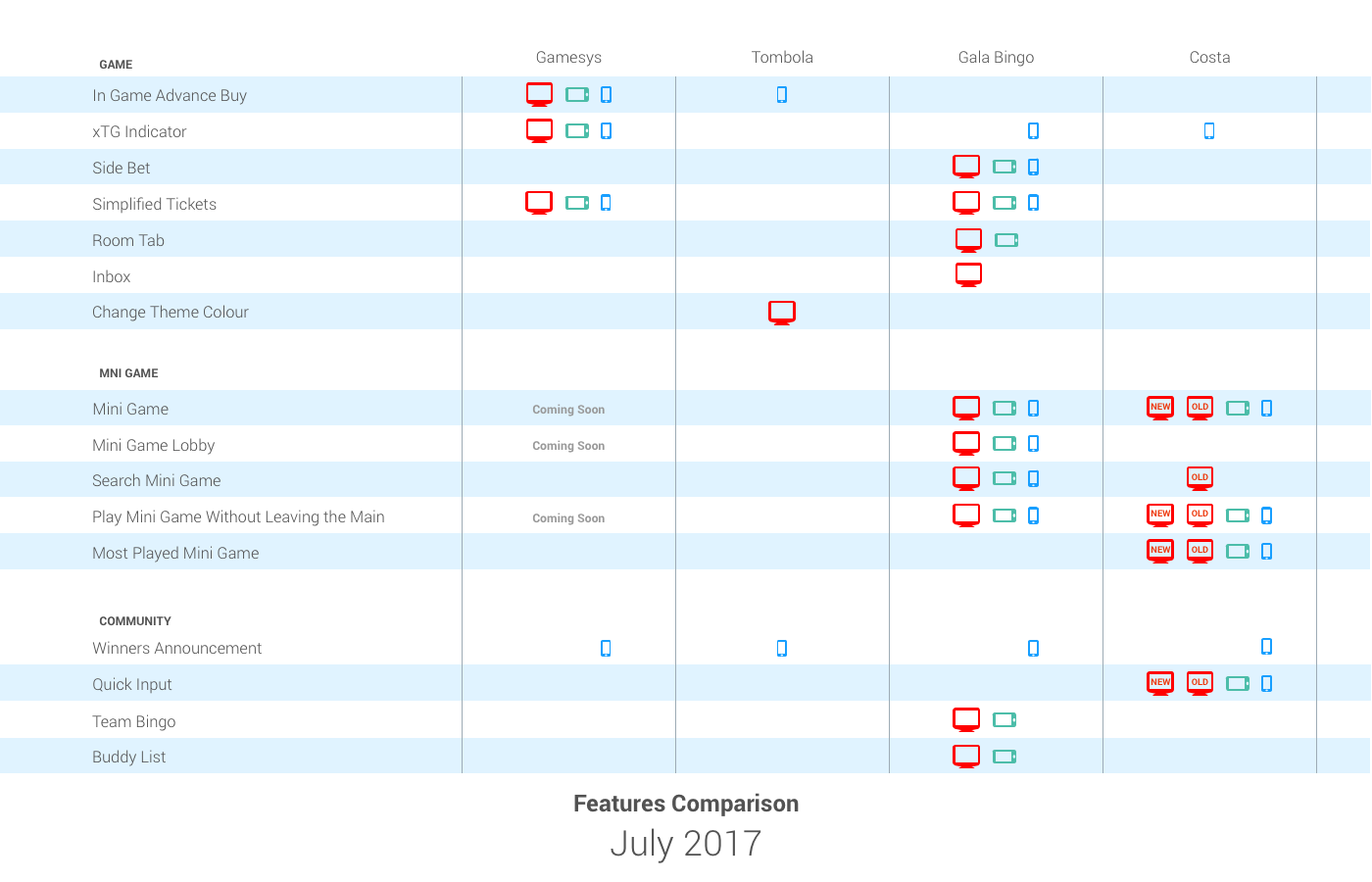
Feature Comparison
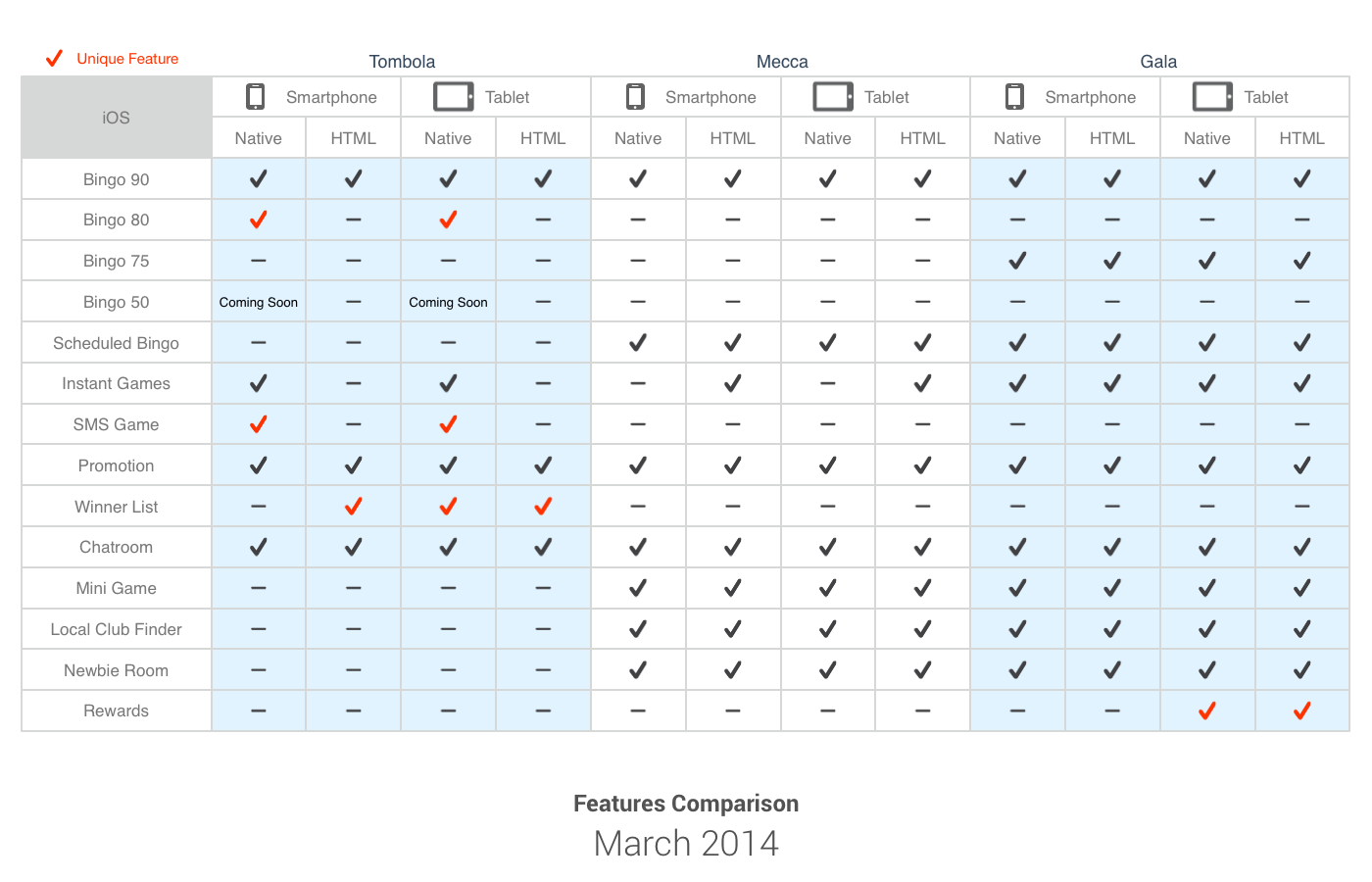
With all the main flows collected, I usually summarise them with a feature comparison chart. It helps to get an understanding of what users expect. It's also far easier to come up with differentiators for our product to achieve competitive advantage.
Outsourced Usability Testing
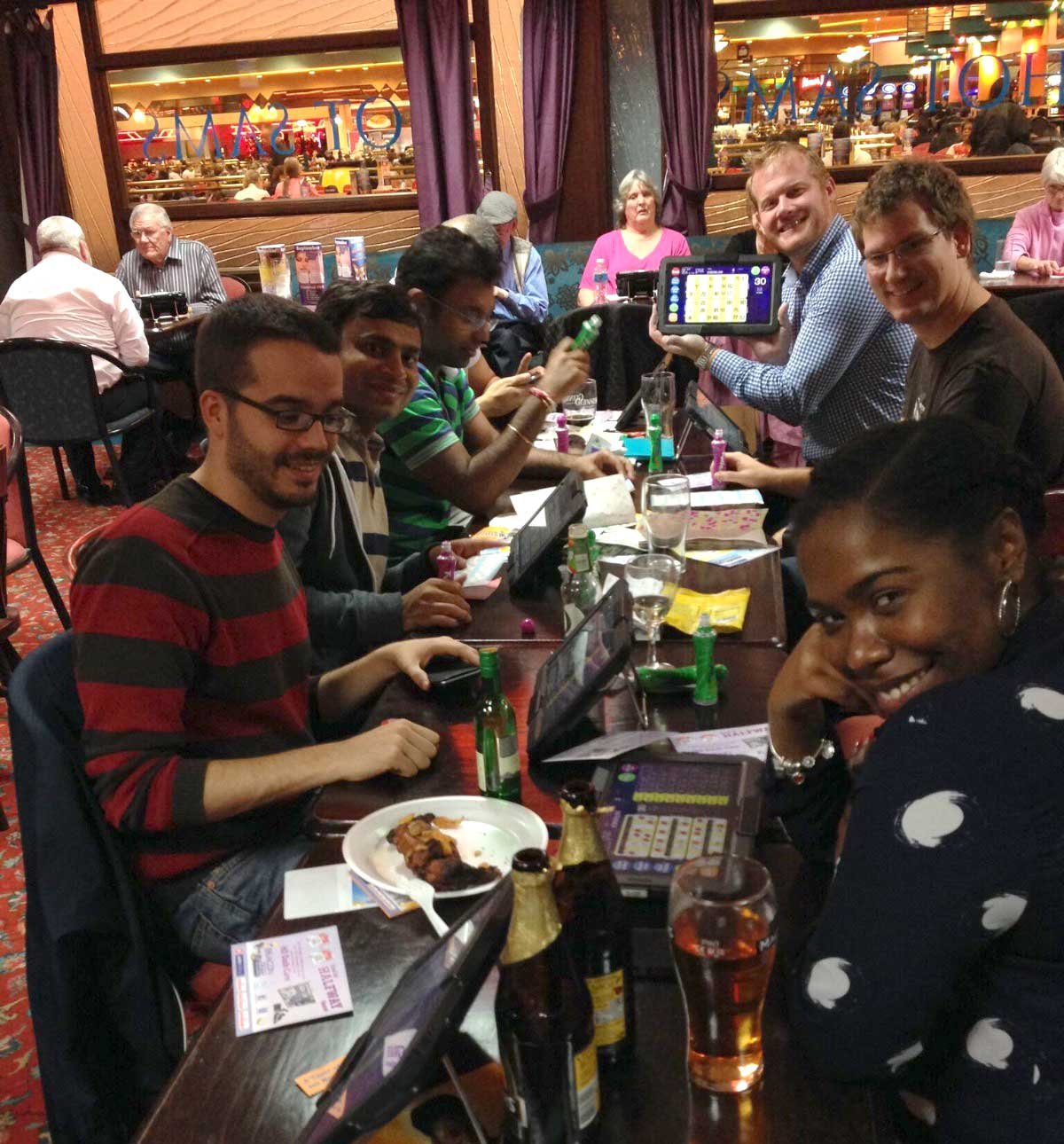
We used to outsource the usability testing for our user research. It was conducted at a third-party venue, and most of the stakeholders spared some time to observe the live-streamed tests. It was quite nice for us to be out of the office, as it helped us get away from our routine — people are more open to new ideas and more likely to think outside the box. In the tests, users shared their experience with our desktop site, followed by qualitative testing on some main user flows. With their eye-tracking technology, we were able to see what they actually focused on while playing the games or going through a promotion.
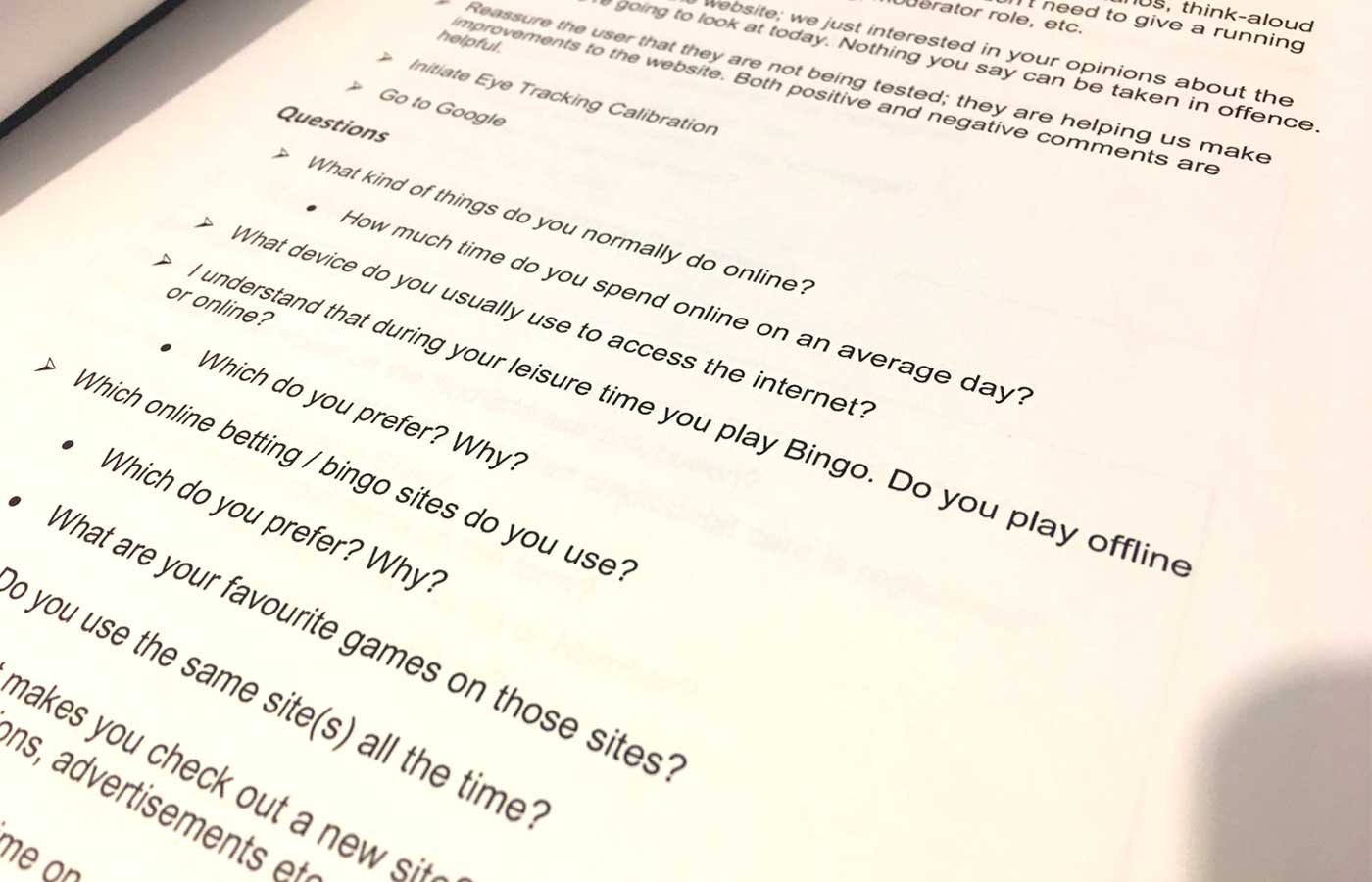
In House Usability Testing
Later on, our company got a lab and we could invite our players in for user research. The equipment was less advanced compared to the third-party lab, but at least it served as a start to get to know more about our users. We conducted a set of usability tests on our competitors’ sites and asked users to compare them with ours.
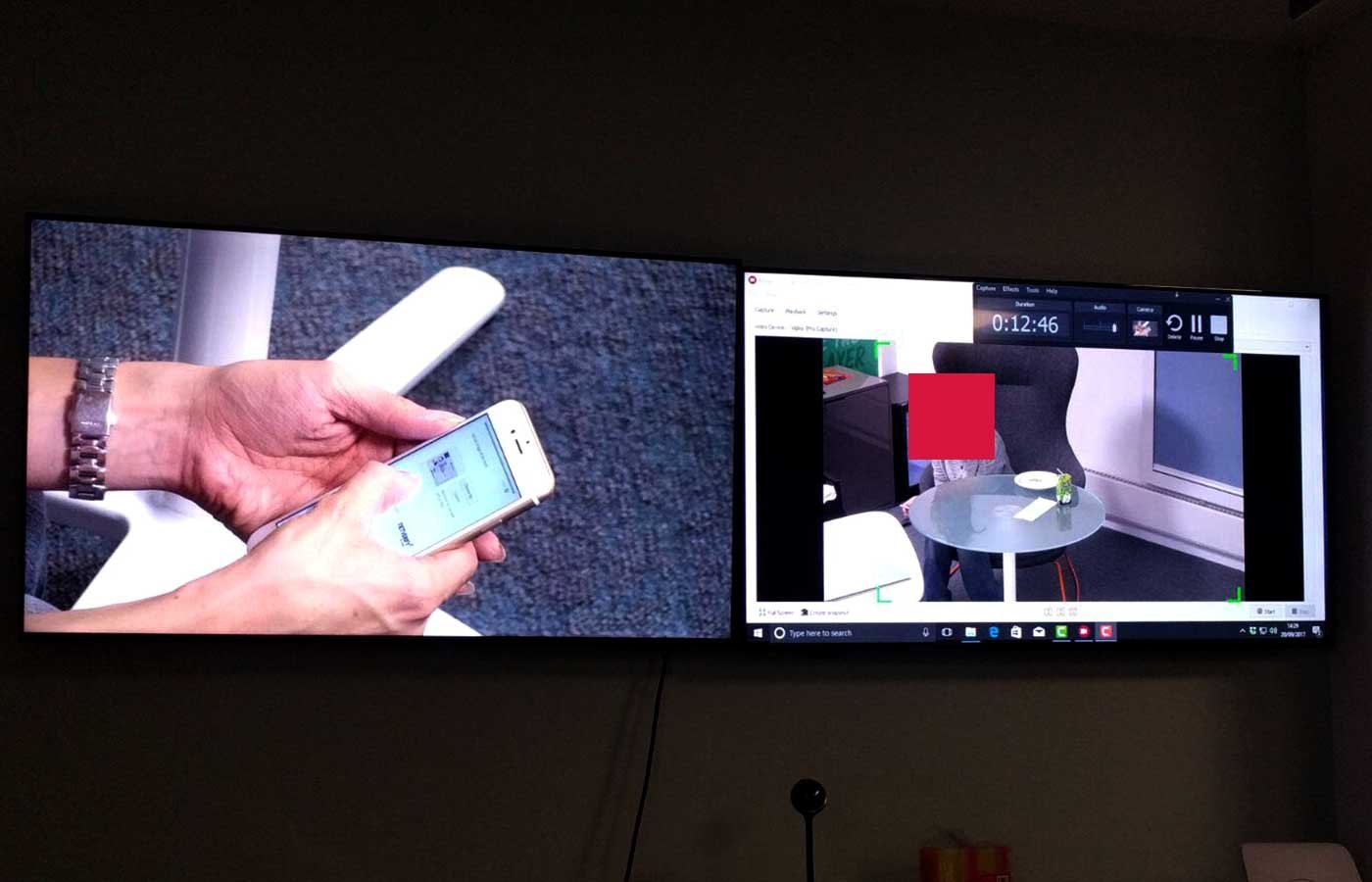
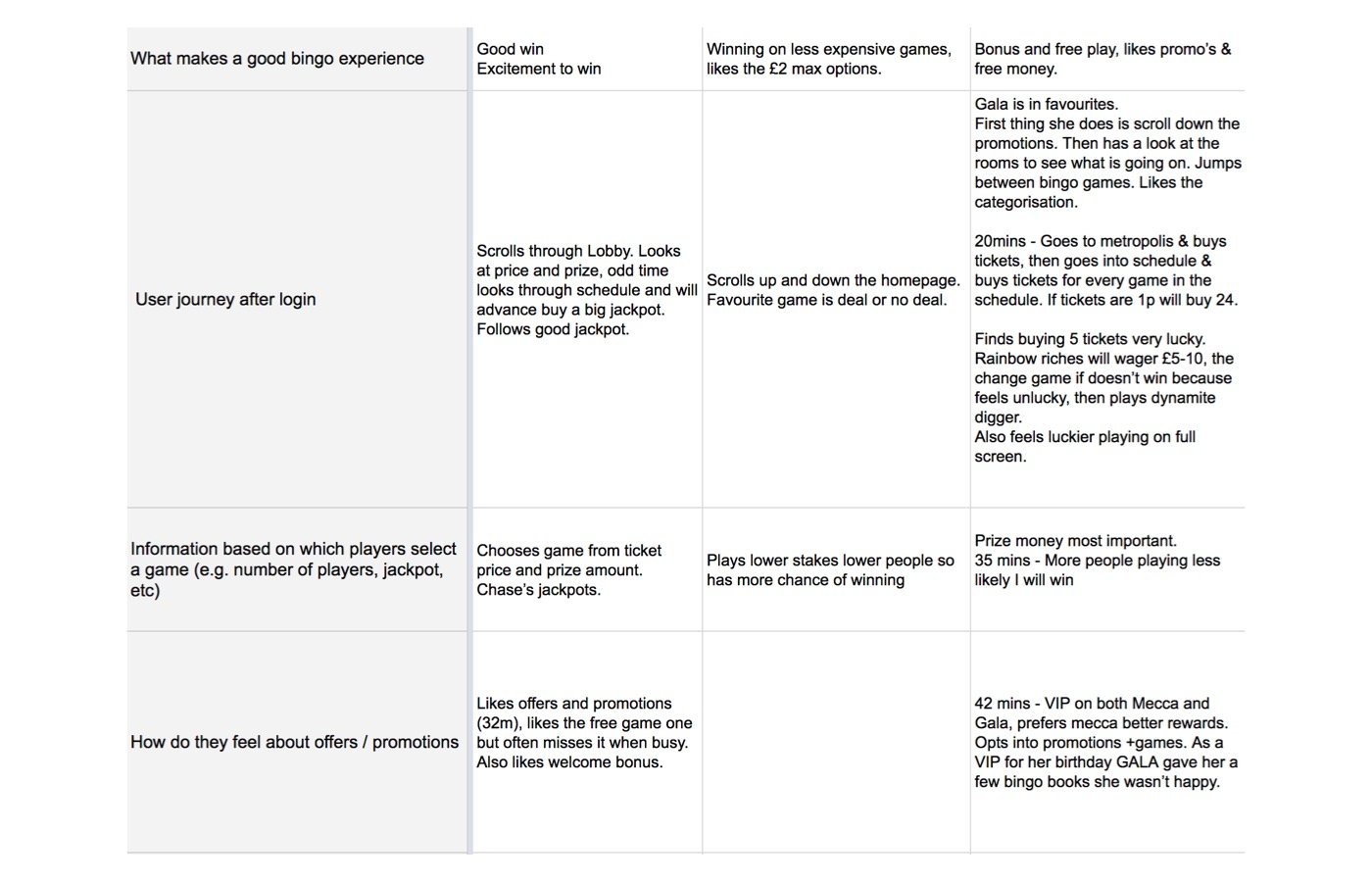
As a bonus beyond the intention of the research, we were able to spot some unexpected usability bugs that we needed to improve on. Credit to Steven from our team for documenting it all.
Strategic MVP and milestones
Breaking a product vision into milestones helps a product launch incrementally towards its ultimate goals. For the first launch, it's better not just to cover the basic features but also to add a little something extra to meet higher-level user needs — this helps maximise the acquisition rate for the debut. Since businesses usually pour a large chunk of their marketing budget into the first launch, it's especially important to make sure there's enough to make users switch and stay.
That's not to say we should have a roadmap carved in stone — that would be totally against the idea of agile development. The milestones should be flexible enough to cope with a changing business environment, yet a long-term vision helps the technical team structure the technical setup.

Technically Future Proof
It was quite a touching moment when a developer came to me and expressed his gratitude for having a full vision of how the product was planned to evolve. He mentioned it helps a lot when it comes to setting up the technical architecture — with that, he could code in a future-proof way.
The devil is in the details - Adding Delightful Moments
I used to work in advertising, and maybe because of that, I'm quite keen on adding a little something extra to enhance the overall experience. Bingo is a great product for surface delight, since it's supposed to be fun and entertaining. I believe these cherries on top of the cake can subtly differentiate our product from competitors.
Since delivering the main features is the priority, we don’t want any delightful features to affect the delivery time of other must-have features in the backlog. So I would usually go for something easy to build. Maintaining a good relationship with developers is crucial in this kind of scenario, because they're more likely to go the extra mile to deliver these things that weren't a must in the pipeline.
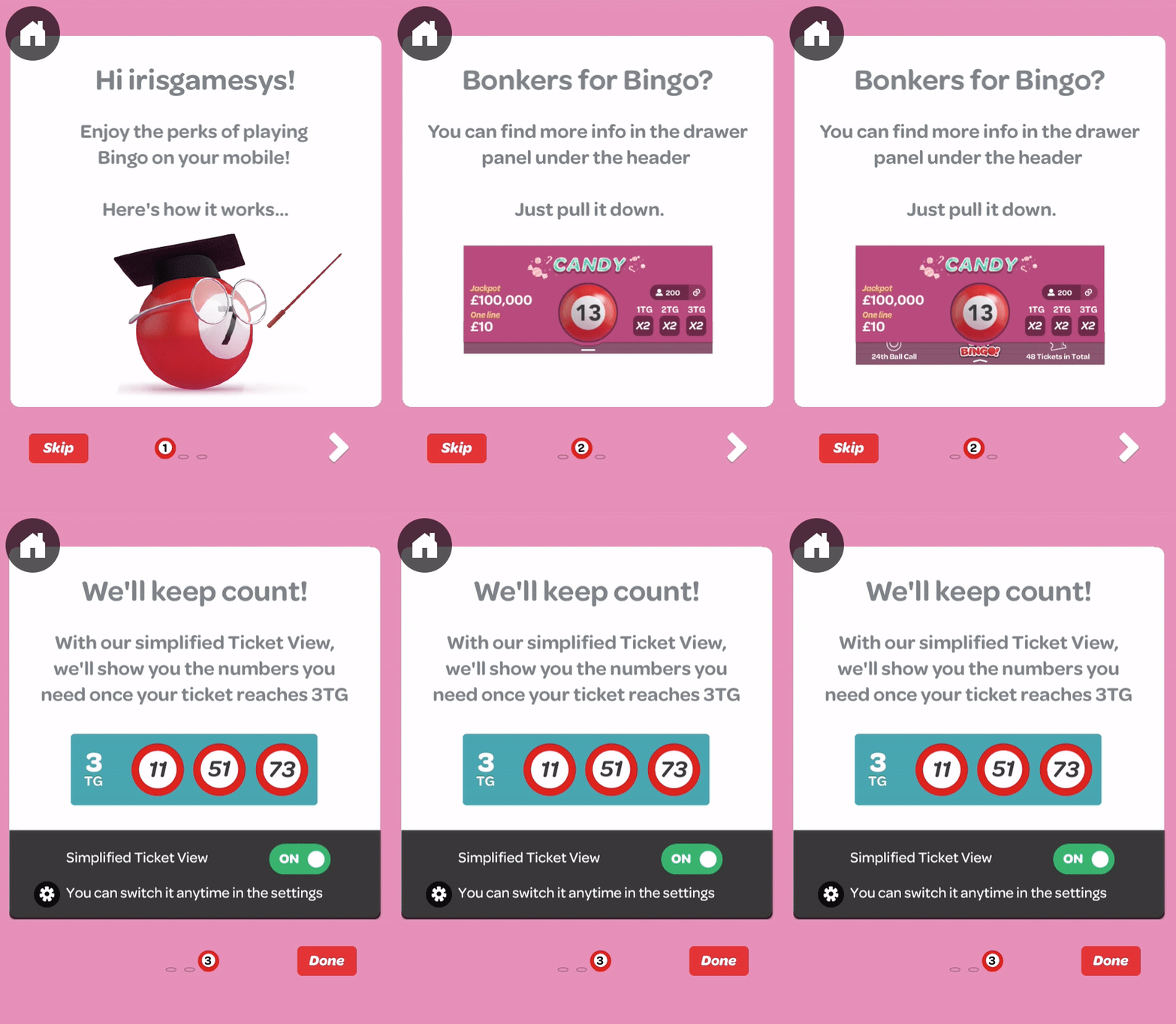
We added a bit of love for the pagination indicator
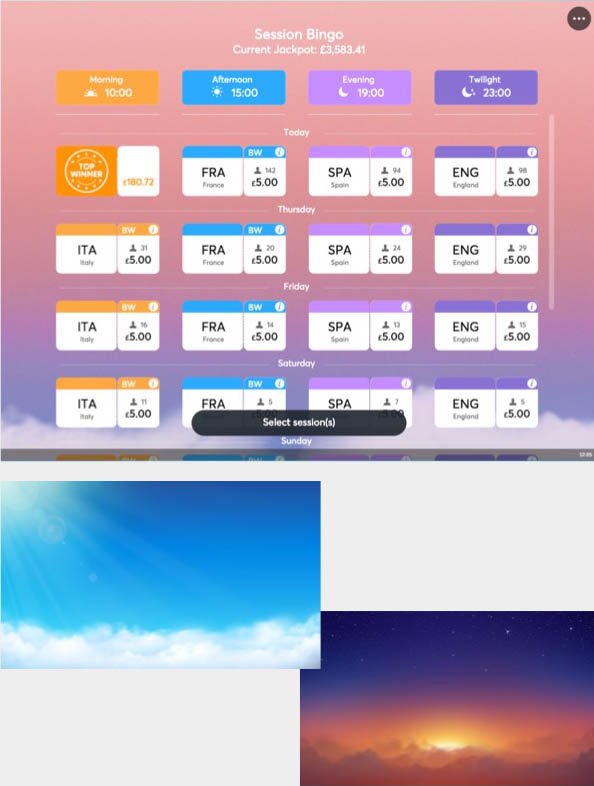
Because it is about different session of a day, the background of the game changes according to the time.
Achievements so far...
1.When I started on this project, we had nothing on mobile devices. Up until now, we have more than 6 types of bingo games across 5 ventures in the UK, Spain, Sweden, and the USA. Mobile devices now contribute more than 30 percent of our revenue.
2.We applied for a patent for our unique Game UX/UI experience.
3.We gradually walked away from a waterfall development model and became more agile, to incorporate user feedback and data into incremental changes.
4.Heart Bingo was named “Best Online Bingo Site” at the 2017 WhichBingo Awards.
5.The whole bingo team is like one big family.